The Four Instruments

The Drums of the Middle East

Four instruments. Four distinct voices. One deep tradition that stretches from the Levant to North Africa, from the Ottoman courts to the modern stage. Each one demands its own technique, its own language, and its own years of devotion.

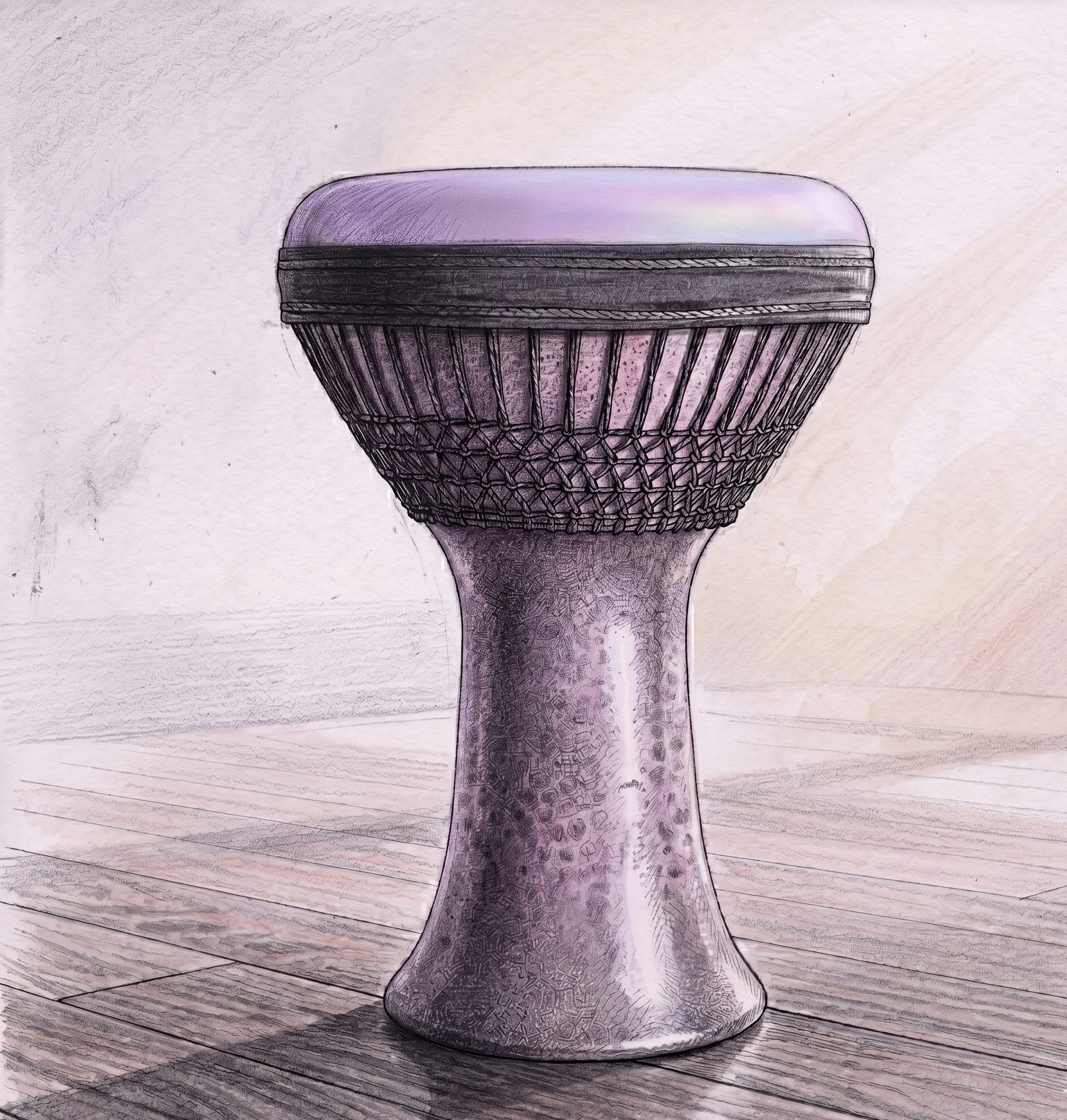
Darbuka — Middle Eastern goblet drum
Goblet Drum

The Darbuka

Darbuka Doumbek Tablah Derbake Tombak

The darbuka is the heartbeat of Middle Eastern music. A single-headed goblet-shaped drum, it appears in virtually every musical tradition from Morocco to Iran, from Turkish classical fasil to Egyptian pop. Its name derives from the Arabic "darba" — to strike — and striking is only the beginning. The instrument produces a remarkable range of tones from a single membrane: the deep, resonant "dum" from the center, the sharp "tek" and "ka" from the rim, and an entire vocabulary of rolls, snaps, slaps, and ornamental strokes that give the darbuka its signature expressiveness.

Origins and Geography

Goblet drums have been documented in Mesopotamia as far back as 1100 BCE. The modern darbuka evolved primarily across two branches: the Egyptian tablah, traditionally made from clay with a fish-skin head, and the Turkish or Levantine darbuka, cast in aluminum with a synthetic head for a brighter, more projecting sound. Today, cast-aluminum darbukas dominate professional performance across the region, though clay instruments remain prized for their warm, earthy tone in traditional settings.

Playing Technique

The darbuka is held upright or at an angle on the player's left thigh. Both hands work the head — the dominant hand strikes center and rim, while the non-dominant hand produces secondary rim strokes and ornaments. What separates a serious darbuka player from a casual one is the mastery of "finger rolls" — rapid cascading strokes that create the shimmering, buzzing textures synonymous with the instrument. Advanced technique includes foot-bell coordination, where the player operates a small cymbal or bell with their foot to add a hi-hat-like layer to their playing.

Role in the Ensemble

In a traditional Arabic or Turkish ensemble (takht or fasil), the darbuka serves as the rhythmic anchor. It articulates the "iqa" — the rhythmic cycle that governs the entire piece. But the darbuka is not merely a timekeeper. In solo passages (particularly in Egyptian-style performance), the darbuka becomes a melodic instrument in its own right, weaving between the ensemble's phrases with improvised fills that mirror the microtonal inflections of the oud or qanun.

Explore the Darbuka Class

Lapstyle Frame Drum
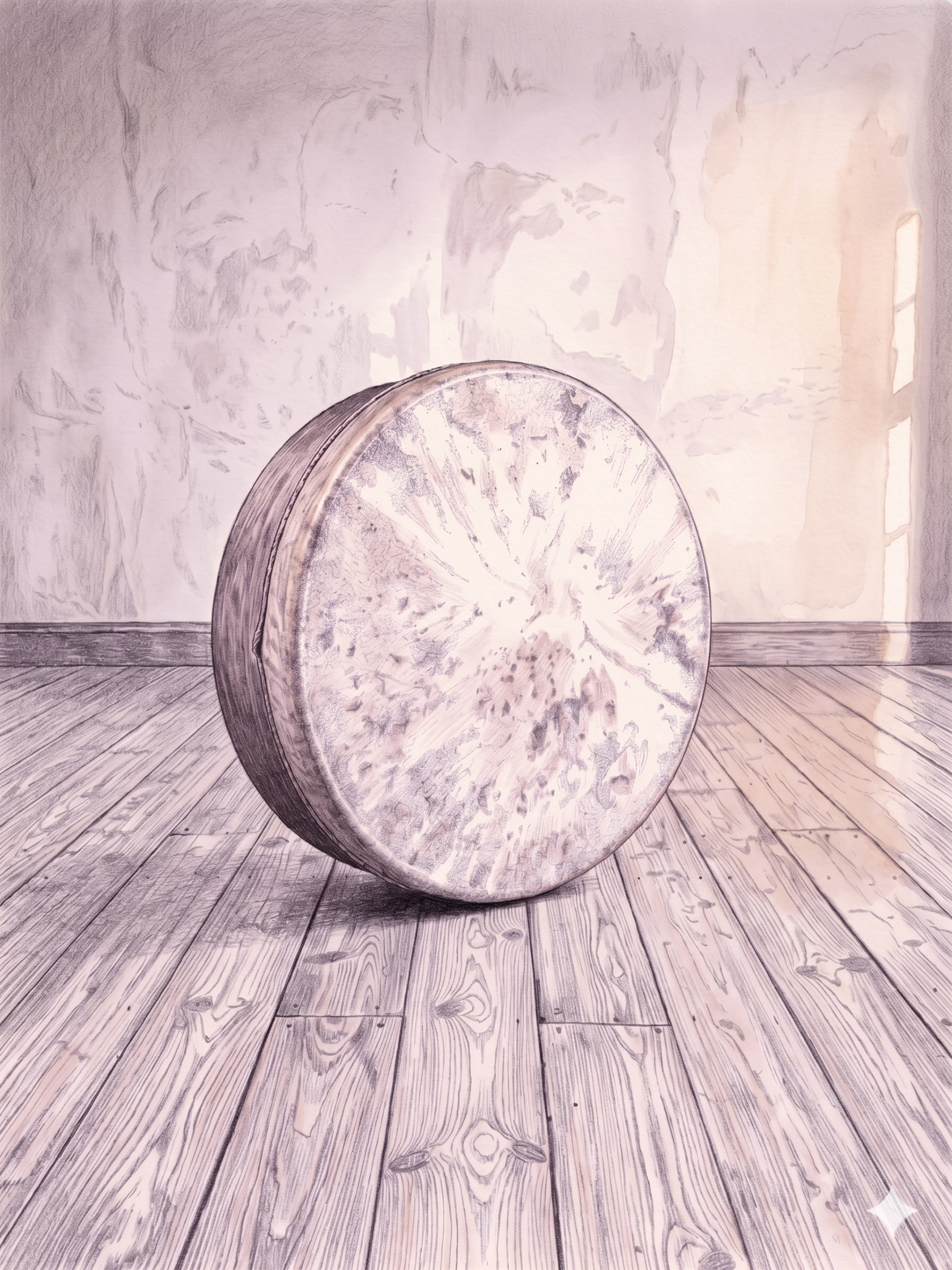
Frame Drum — Lap Position

The Lapstyle Frame Drum

Tar Bendir Daf Bodhrán Frame Drum

The frame drum is the oldest known drum in human history. Archaeological evidence from Mesopotamia, Egypt, and the Mediterranean basin dates frame drums to at least 3000 BCE, where they appear in the hands of priestesses, healers, and ceremonial musicians. The instrument is deceptively simple in form — a shallow circular frame with a membrane stretched across one side — but the range of sounds it produces is vast and deeply expressive.

The Lap Position

The "lapstyle" technique refers to playing the frame drum while seated, with the drum resting on the player's lap. This position — distinct from the upright or hand-held position — allows both hands to work the drumhead simultaneously, unlocking a full palette of bass tones, rim accents, finger rolls, and pressure modulations. The lap position is the foundation of the Afterman Method's frame drum curriculum, enabling the player to develop independence between the two hands early in the learning process.

Acoustic Properties

A frame drum's voice is shaped by its diameter, frame depth, head material, and tuning. Larger drums (18–22 inches) produce deep, resonant bass tones that can be felt physically in a room. Smaller drums (12–16 inches) offer crispness and articulation. Natural skin heads (goat, fish, calf) respond to humidity and temperature, giving the drum a living quality — no two performances sound identical. Synthetic heads provide consistency across environments, making them preferred for studio and touring work.

Cultural Context

Frame drums appear in nearly every musical culture touching the Mediterranean: North African Gnawa and Andalusian traditions, Persian classical and Sufi devotional music, Turkish Mevlevi ceremony, Southern Italian tarantella, and Irish folk. The instrument's universality is not coincidental — its simplicity of construction and directness of sound made it the natural first drum of human civilization. Learning the frame drum means learning a language shared across thousands of years and dozens of cultures.

Explore the Frame Drum Class

Riqq — Middle Eastern jingle tambourine
Jingle Frame Drum

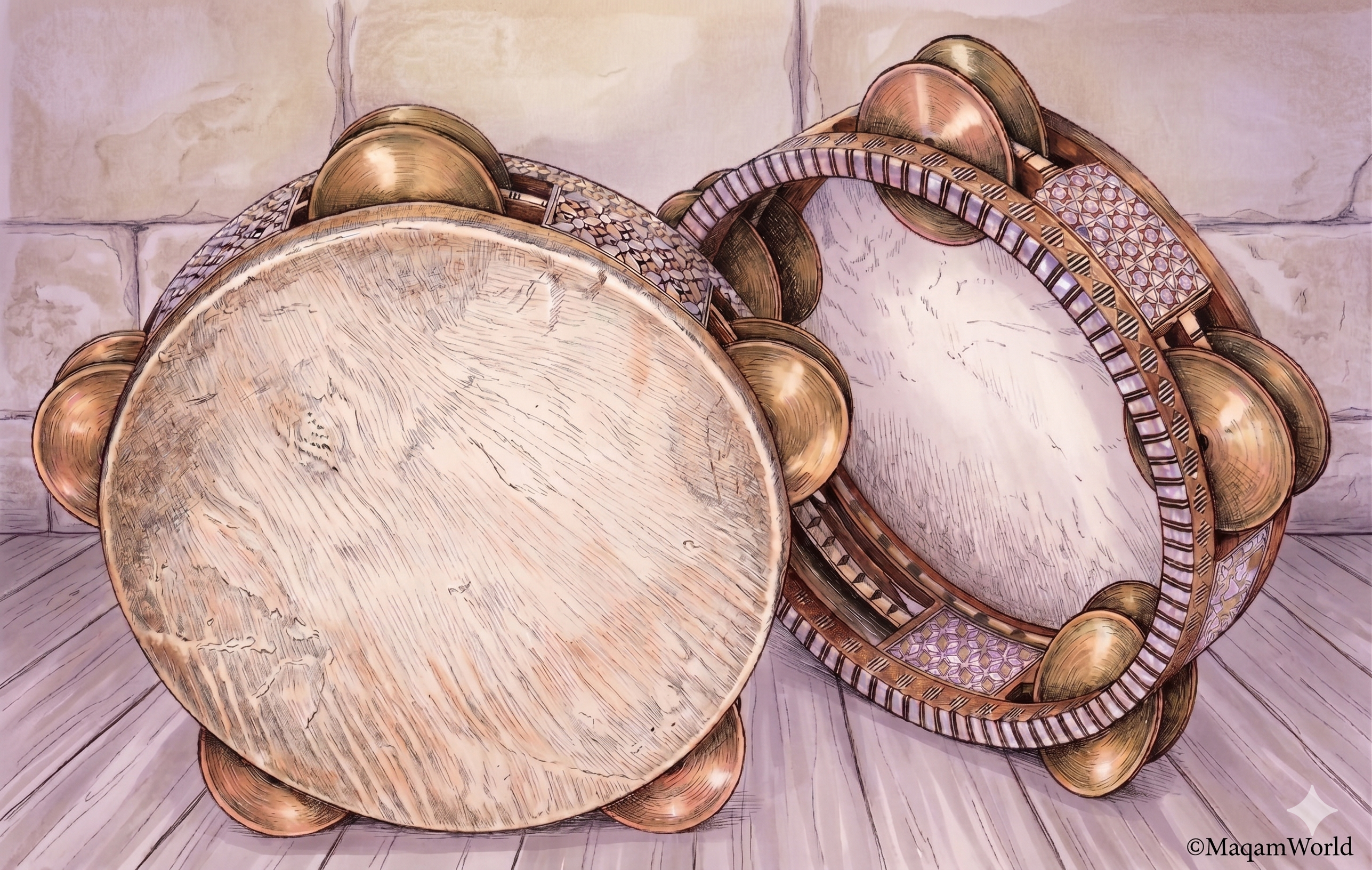
The Riqq

Riqq Riq Daff Mazhar

The riqq is a small frame drum fitted with pairs of metal jingles (typically five pairs of small brass or nickel-silver cymbals) set into the wooden frame. It is the primary percussion instrument of the classical Arabic ensemble, the takht, and holds a status in Middle Eastern music roughly equivalent to what the violin holds in a Western orchestra — not the loudest instrument, but arguably the most refined and technically demanding.

Why the Riqq Matters

In the classical Arabic tradition, the riqq player is the conductor of rhythm. The riqq does not simply keep time — it interprets time. Through subtle changes in accent, jingle color, and dynamic shading, the riqq player communicates with the ensemble: signaling transitions, echoing melodic phrases, and controlling the emotional temperature of the music. A great riqq player can shift the entire feel of a piece with a change in wrist angle.

Technique and Sound Palette

The riqq produces three distinct families of sound: the drum head (bass and rim tones), the jingles (sustained shimmer, crisp accents, muted chokes), and combinations of both. Advanced riqq technique involves rapid alternation between head and jingle strokes, creating polyrhythmic textures from a single small instrument. The "shakkah" — a fast, shimmering jingle roll — is perhaps the most recognizable riqq sound, used to build tension and ornamentation throughout classical and popular Arabic music.

Modern Evolution

While the traditional riqq features a fish-skin head and wooden frame, modern concert riqq instruments use synthetic heads, aluminum frames, and precisely tuned jingle alloys. These innovations allow the instrument to project in larger concert halls and adapt to amplified ensemble settings. Despite these material changes, the playing vocabulary remains rooted in the classical tradition — the techniques taught in conservatory riqq programs today trace directly to the golden-age Egyptian and Levantine masters.

Explore the Riqq Class

Upright Frame Drum
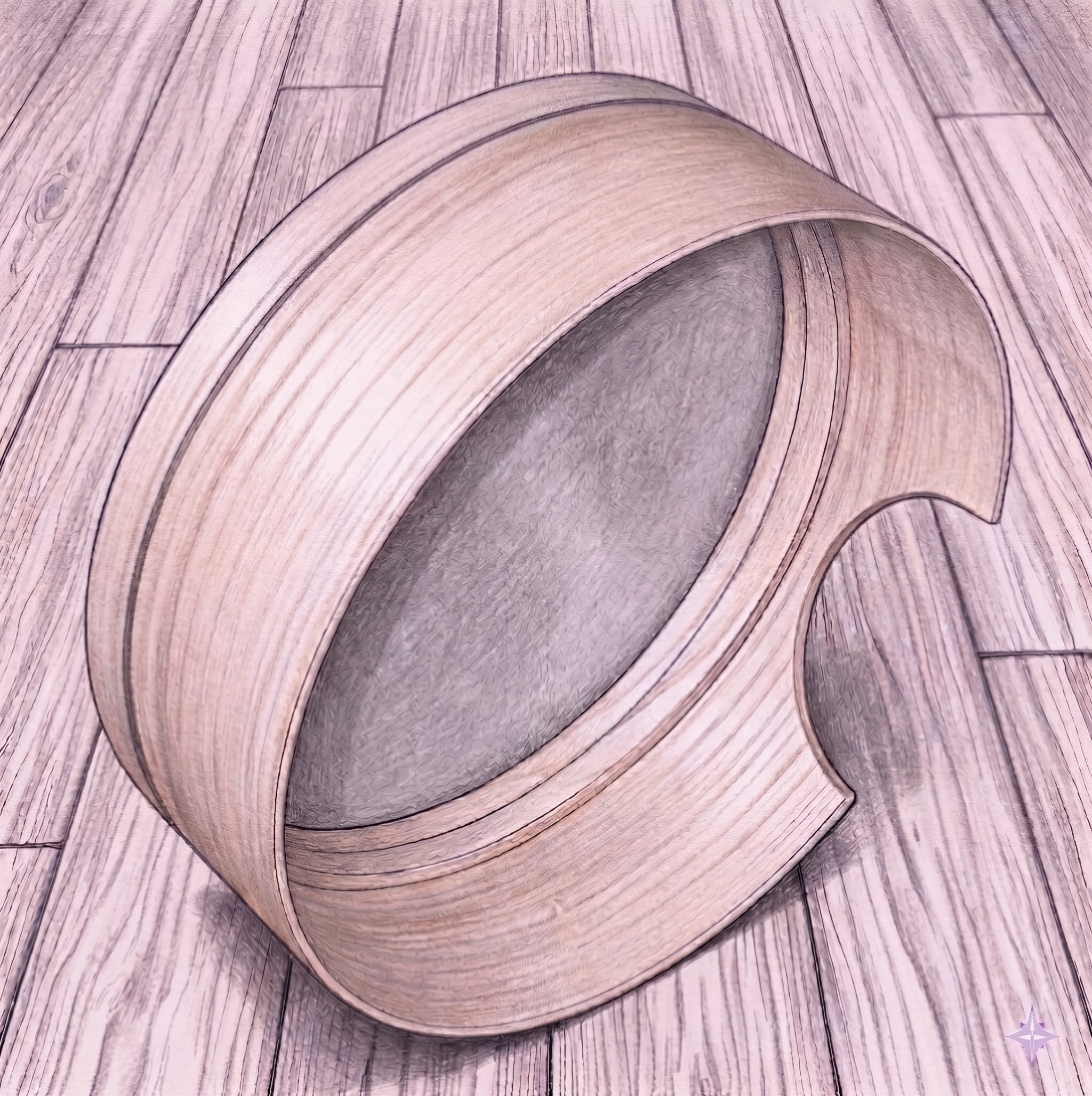
Frame Drum — Upright Position

The Upright Frame Drum

Tar Daf Dayereh Bendir

The upright position is the frame drum's original playing posture — held vertically in one hand while the other strikes the head and rim. This is how frame drums appear in ancient reliefs and paintings from Sumer to Rome, and it remains the primary position in many living traditions: Persian daf, Kurdish frame drum, Moroccan bendir, and the contemporary concert frame drum school pioneered by artists like Glen Velez.

How Upright Differs from Lapstyle

While lapstyle distributes responsibility equally between both hands on the drumhead, the upright position creates a fundamentally different relationship with the instrument. One hand holds and controls the drum (modulating pitch through finger pressure on the underside of the head), while the other hand generates all the strokes. This constraint is also a liberation — the holding hand's ability to bend pitch in real time gives the upright frame drum a singing, almost vocal quality that no other percussion instrument can replicate.

The Language of Pitch Bending

The defining technique of the upright frame drum is pitch modulation. By pressing the thumb or fingers of the holding hand against the backside of the drumhead, the player can continuously vary the pitch from a deep open tone to a high, choked snap — and every shade in between. Advanced players use this to create melodic phrases on a single-headed drum, mirroring vocal ornaments (melisma) and string-instrument slides. This is not an effect or a trick. It is the instrument's primary expressive language.

Contemporary Performance

The upright frame drum experienced a global renaissance beginning in the 1980s, when concert artists began synthesizing techniques from multiple traditions — combining Persian daf finger patterns with Brazilian pandeiro thumb rolls, or Turkish bendir snares with South Indian kanjira articulations. Today the upright frame drum is one of the most internationally active percussion instruments, appearing in world music ensembles, contemporary classical commissions, jazz collaborations, and solo recitals.

Explore the Upright Class

Ready to Begin?

The Conservatory teaches all four instruments through a structured, level-based curriculum. Weekly live classes, personal feedback, and over 12 years of teaching experience across 25+ countries.

Apply to Study